

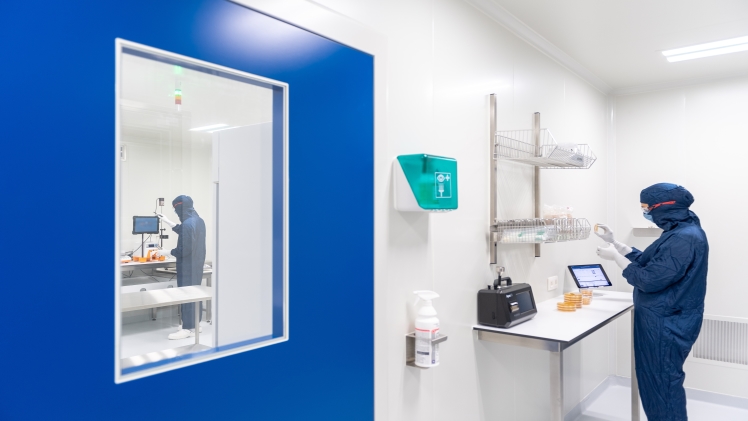
In today’s rapidly advancing high-tech industries, precision, quality, and reliability are paramount. From semiconductor manufacturing to aerospace engineering, the production of high-tech components and devices demands an environment that ensures optimal cleanliness and strict control over particulate contamination. This is where cleanroom assembly plays a pivotal role.
In this article, we will explore the significance of cleanroom assembly in high-tech industries and delve into its benefits and applications.
Maintaining Clean Environments
Cleanroom assembly is a meticulous process that involves the creation of controlled environments with extremely low levels of airborne particles, including dust, fibers, and microorganisms.
These environments are purposefully designed and maintained to prevent contaminants from interfering with the assembly process. The primary objective is to safeguard the integrity and functionality of high-tech products. Cleanrooms are classified based on the maximum allowable particle concentration per cubic meter of air.
For instance, ISO Class 7 cleanrooms allow a maximum of 352,000 particles of size 0.5 μm or larger, while ISO Class 5 cleanrooms permit only 3,520 particles of the same size. These strict classification standards highlight the stringent measures taken to ensure optimal cleanliness and prevent any compromise in the assembly process within cleanroom environments.
Protecting Sensitive Components
High-tech industries, such as semiconductor manufacturing, face a critical challenge when it comes to maintaining the integrity of delicate components that are highly susceptible to contamination. Even the presence of a single particle can have severe consequences, disrupting the performance of microchips and leading to significant financial losses.
A study conducted by the Institute of Environmental Sciences and Technology (IEST) revealed that contamination-related issues cost high-tech industries billions of dollars annually in terms of lost production, rework, and warranty claims.
To address this issue, cleanroom assembly facilities implement stringent measures to safeguard these sensitive components throughout the assembly process. Specialized filters, air handling systems, and rigorous cleaning protocols are employed to minimize particle generation and maintain a sterile environment.
By doing so, cleanroom assembly ensures that high-tech industries can mitigate the risks associated with contamination and protect the reliability and performance of their products.
Ensuring Product Quality and Reliability
American Cleanroom Systems notes that cleanroom assembly directly impacts the quality and reliability of high-tech products. By minimizing contamination risks, cleanrooms help reduce defects, improve yields, and enhance product performance.
The controlled environment within cleanrooms ensures consistent and predictable outcomes, which is critical for meeting stringent industry standards and customer expectations.
Facilitating Advanced Manufacturing Processes
Many high-tech industries employ advanced manufacturing techniques such as microelectronics assembly, nanotechnology, and biotechnology. These cutting-edge processes demand a high level of precision, and any contamination during assembly can lead to significant setbacks.
Cleanroom assembly provides the necessary conditions for these intricate manufacturing processes, allowing for the integration of advanced technologies and the production of sophisticated devices.
Regulatory Compliance and Industry Standards
High-tech industries are subject to stringent regulatory requirements and industry standards. Cleanroom assembly facilities are designed and operated to comply with these regulations, ensuring that the products manufactured meet the necessary quality, safety, and reliability standards. Adhering to these guidelines is not only a legal requirement but also an essential aspect of maintaining a strong reputation in the industry.
Applications of Cleanroom Assembly
As per a report by GlobeNewswire, the global cleanroom technology market was valued at $4.4 billion in 2021. It is anticipated to witness substantial growth, reaching a projected value of $9.7 billion by 2032. These statistics highlight the increasing demand and importance of cleanroom technology across various industries.
Some of these high-tech industries are:
Semiconductor Manufacturing
Cleanroom assembly is essential in semiconductor fabrication, where precise control over contamination is crucial for the production of microchips and integrated circuits.
Aerospace and Defense
In aerospace and defense industries, cleanroom assembly is used for manufacturing electronic components, sensors, and critical systems to ensure optimal performance and reliability.
Medical Device Manufacturing
Cleanroom assembly is vital in the production of medical devices, implants, and diagnostic equipment to minimize the risk of contamination and ensure product safety.
Optics and Photonics
Cleanroom environments are essential in optics and photonics industries, where the assembly of lenses, lasers, and optical systems requires precise handling in a controlled environment.
Conclusion
Cleanroom assembly plays a vital role in high-tech industries by providing controlled environments that minimize contamination risks during the manufacturing process. The stringent cleanliness standards and quality control measures followed in cleanrooms ensure product reliability, adherence to regulatory requirements, and compliance with industry standards.
As high-tech industries continue to push the boundaries of innovation, cleanroom assembly will remain an indispensable component for achieving precision, quality, and reliability in the production of advanced technologies.
