

Your heart can stop beating all of a sudden (SCA), which is a medical emergency that can kill you. It happens when the heart stops beating all of a sudden, cutting off blood flow to the brain and other important organs. SCA can be fatal in minutes if no one helps right away. Luckily, cardiopulmonary resuscitation (CPR) is a very important way to help SCA people have a better chance of living. This article will talk about how CPR can help lower the number of deaths from sudden cardiac arrest and how you can find a first aid school near you to learn this life-saving skill.
Understanding Sudden Cardiac Arrest
People often mix up sudden cardiac arrest and a heart attack, but they are not the same thing. When one or more of the coronary arteries become blocked, blood flow to the heart muscle is limited. This is called a heart attack. VVFI is an abnormal heartbeat that happens when the heart’s electrical system doesn’t work right. SCA, on the other hand, is caused by these problems.
When the heart has ventricular fibrillation, its electrical signals get jumbled, which makes the heart quiver instead of beating properly. This causes the person to lose consciousness right away and stop having a pulse. Death can happen quickly if nothing is done.
The Importance Of Immediate CPR
Quick action is the best way to help SCA victims have a better chance of life. This is where CPR plays a critical role. Before professional medical help comes, CPR is a set of life-saving techniques meant to keep the blood flowing and get oxygen to the brain and other important organs.
Every second counts when someone is having a heart arrest. Without oxygen-rich blood flowing through the body, brain damage that can’t be fixed can happen in just a few minutes. So, starting CPR right away is very important.
The ABCs Of CPR
CPR is typically taught using the acronym “ABC,” which stands for:
A for Airway: The first step in CPR is to ensure that the victim’s airway is clear of obstructions. To get more air, tilt the head back and lift the chin.
B for Breathing: Check for signs of breathing. If the victim is not breathing or is only gasping for breath, initiate rescue breaths.
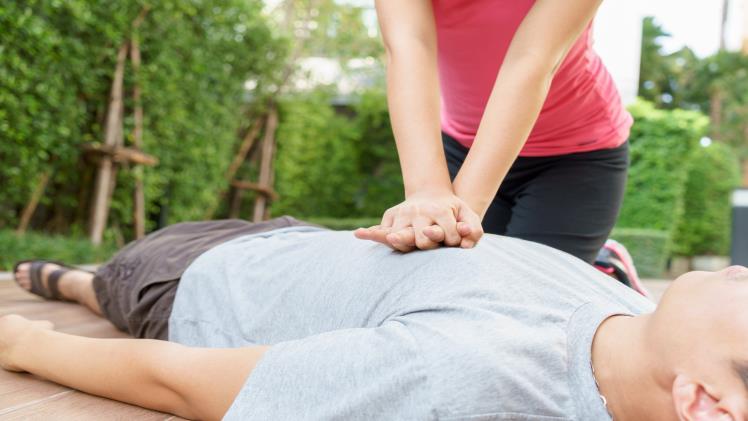
C for Compressions: If the victim is unresponsive and not breathing normally, begin chest compressions. Place the heel of one hand on the center of the chest and interlock the fingers of your other hand. Strive to do at least 100 to 120 chest compressions per minute. Press hard and quickly in the middle of the chest.
Finding A First Aid Course Near You
You can learn how to do effective CPR with the right training. Finding a first aid course near you is the first step toward gaining the knowledge and confidence needed to respond to a cardiac arrest emergency. Many organizations and institutions offer CPR and first aid training courses, making them accessible to individuals of all backgrounds and professions.
When searching for a “first aid course near me,” consider the following:
Local Hospitals and Medical Centers: People can often take CPR and first aid classes at hospitals. Most of the time, qualified teachers teach these classes and can give students both hands-on training and certification.
Red Cross and Red Crescent Chapters: The American Red Cross and similar organizations worldwide offer CPR and first aid training programs. They have chapters in many communities and can help you find a course near you.
Community Centers and Schools: Many community centers, schools, and colleges host CPR and first aid classes. These classes are often open to the public and provide convenient options for residents.
Online Resources: In addition to in-person courses, there are online CPR and first aid training programs available. While hands-on practice is essential, online resources can be a valuable complement to your training.
The Importance Of CPR Certification
Completing a CPR course not only equips you with life-saving skills but also provides you with CPR certification. This certification demonstrates that you have received proper training and can perform CPR effectively. CPR certification is often required for certain jobs, such as lifeguards, healthcare professionals, and childcare providers. Additionally, having CPR certification can give you the confidence to respond effectively in emergencies.
Conclusion
In conclusion, CPR is a critical skill that plays a pivotal role in reducing sudden cardiac arrest deaths. Immediate action, in the form of CPR, can provide a bridge between a life-threatening situation and the arrival of professional medical help. The ability to perform CPR is something that everyone should consider acquiring, and finding a first aid course near you is the first step toward gaining this life-saving skill.
Remember that in emergencies, such as sudden cardiac arrest, every second counts. By learning CPR and obtaining certification, you not only increase the chances of survival for those around you but also become a crucial link in the chain of survival. So, take the initiative, find a first aid course near you, and equip yourself with the knowledge and skills to make a difference in someone’s life when it matters most.
